
SBI Cards, like most other credit card issuers in the country, suffered losses during the financial crisis of 2008-09 due to sharp increase in delinquencies. The company, a joint venture between State Bank of India and GE Capital, turned profitable in 2010-11. Kadambi Narahari, chief executive officer, shares the strategy to grow the company's cards business in coming years.

Indian billionaire Shiv Nadar's foray into the insurance sector is likely to fructify soon. DLF Pramerica Life, seeking an Indian partner for its operation, is in talks with Nadar's HCL Group to sell a majority stake. According to those in the know, both parties are back on the table to iron out the nitty-gritty, after the deal got stuck a year back due to stringent guidelines.

Adidas chief executive officer Herbert Hainer is expected to be in India soon, as the local unit of the German sportswear maker, Reebok India, finds itself embroiled in a controversy, following the exit of its senior management, including Adidas India managing director Subhinder Singh Prem, amid allegations of commercial irregularities.

Facing huge redemption pressure on funds raised via foreign currency convertible bonds (FCCBs), India Inc has requested the Reserve Bank of India (RBI) to allow companies to offer higher interest rates on fresh foreign currency loans or bonds, the proceeds of which will be used to pre-pay existing FCCBs.

The appetite for Indian assets is growing among investors from the land of the samurai. An appreciating yen, combined with slow economic growth, has persuaded many Japanese investors to explore opportunities beyond their national boundary, and India appears to be one of their preferences.

Nestle's acquisition of Pfizer's infant nutrition business has an India angle to it. While Pfizer does not have its infant nutrition brands such as SMA Gold, Promil Gold, Progress Gold and Promise Gold in India yet, the threat that it could launch these products in the country was always there, thanks to its strong presence in neighbouring countries such as China, Indonesia and the Philippines.

ICICI works on similar lines; alternative to Business Correspondents to reach financial inclusion targets.
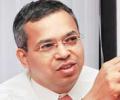
Donald D'Souza, the new head of HDFC Bank's equity capital markets business, prefers to keep himself fit by playing badminton.
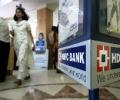
The lender's comfortable liquidity position, combined with downward bias in interest rates and slow credit growth expectations in the first three months of this financial year, has allowed it to take this decision.

The deal is stuck because the Reserve Bank of India has declined to transfer the branch licences of RBS to HSBC.

The life insurance arm of the country's largest private-sector lender does it not to expand workforce, but to maintain its strength, as almost a similar number of staffers keeps leaving every month.

He's 68, but he shows no signs of slowing down. Ranjan Kapur, country manager, WPP India, has the additional responsibility of Bates India now as its chairman, but the former head of Ogilvy & Mather has taken it up in earnest.

Ranjan Kapur has been country manager of WPP in India for the last eight years. But he gets back to actively managing operations at an agency with the additional responsibility of Bates India as its chairman.

We will utilise India as a creative resource for all our offices around the world, says Chuck Brymer, President and CEO, DDB Worldwide.

For instance, a pack of 20 Classic branded cigarettes (from ITC) now costs Rs 120.

In absolute terms, close to 9.2 million customers (almost equal to Mumbai's suburban population) have defaulted on loan repayment. Microfinance institutions currently have around 32 million clients in the country.

Before joining IndusInd Bank, he was the regional head of RBS' corporate solutions business in Asia Pacific region and was based in Singapore.

Kotak Mahindra Bank has acquired the non-performing portfolio of Barclays Bank's credit card business in India. The deal, experts said, gives momentum to the sale of stressed loan market in the country which has been having a dry run following stringent regulatory norms introduced in 2007.

After five years and numerous attempts to launch outlets in India, coffee house giant Starbucks will finally roll out its cafes here, in partnership with Tata Global Beverages (TGB), by August-September. John Culver, president, of the chain's China and Asia Pacific region, tells what the joint venture (JV) means for it and the way ahead.
After five years and numerous attempts to launch outlets in India, coffee house giant Starbucks will finally roll out its cafes here, in partnership with Tata Global Beverages (TGB), by August-September. John Culver, president, of the chain's China and Asia Pacific region, tells what the joint venture (JV) means for it and the way ahead.
 © 2026 Rediff.com - Investor Information - Advertise with us - Disclaimer - Privacy Policy - Sitemap - Feedback - About us - Terms of use - Grievances